
Why Do I Suddenly Have to Pee When I Get Home? |
That strange front-door urgency has a name, and women should be talking about it. |

You’ve been out for hours.
Maybe you’ve run errands all morning, sat through traffic, wandered the grocery aisles and driven twenty minutes home without giving your bladder much thought.
You pull into the driveway. Everything is fine.
You gather your bags, walk toward the house and reach for your keys.
And suddenly, inexplicably, you have to pee.
Not after you put away the groceries. Not in five minutes. Now.
The closer you get to the bathroom, the more urgent it becomes. You fumble with the key. You cross your legs. You attempt negotiations with your own body. And sometimes, despite your very best efforts, you simply cannot hold it.
If this has happened to you, you are far from alone.
There is even a name for this strangely specific phenomenon: latchkey incontinence, sometimes called lock-and-key or key-in-the-door syndrome.
And yes, the front door really can be part of the equation.
How Does My Bladder Know I’m Home?
That may be the most fascinating question of all.
Latchkey incontinence is associated with urinary urgency or urge incontinence, but unlike the gradual realization that you should probably find a bathroom soon, the sensation can feel astonishingly sudden.
For some women, the trigger is putting the key into the lock. For others, it begins while walking toward the front door, riding the elevator to their apartment, pulling into the driveway or even finishing that last errand and beginning to think about going home.
The body is extraordinarily good at recognizing patterns.
If arriving home is routinely followed by going to the bathroom, the sights, movements and sensations associated with homecoming can become connected with urination. Eventually, the sequence itself may begin eliciting the urge.
It’s not entirely unlike hearing running water and suddenly realizing you need to go.
Our minds and bodies are not operating independently of one another. Our nervous systems are constantly forming associations with our environments, habits and experiences, often without our conscious participation.
Your bladder probably hasn’t memorized your address.
But your body may very well recognize that front door.
Why Don’t We Talk About This?
Perhaps because bladder leakage remains one of those peculiar women’s health subjects that is remarkably common and yet somehow still embarrassing to mention.
Pregnancy, childbirth, menopause, pelvic-floor changes and aging can all influence urinary function. Many women quietly adapt without ever bringing the subject up.
We pee before leaving the house whether we need to or not. We identify the bathroom everywhere we go. We stop drinking water before a long drive. We cross our legs before coughing or sneezing. We know exactly how long we can make it through Target.
And somewhere along the way, many of us begin believing this is simply another thing women are expected to tolerate.
It isn’t.
Understanding what is happening is the first step toward doing something about it. |
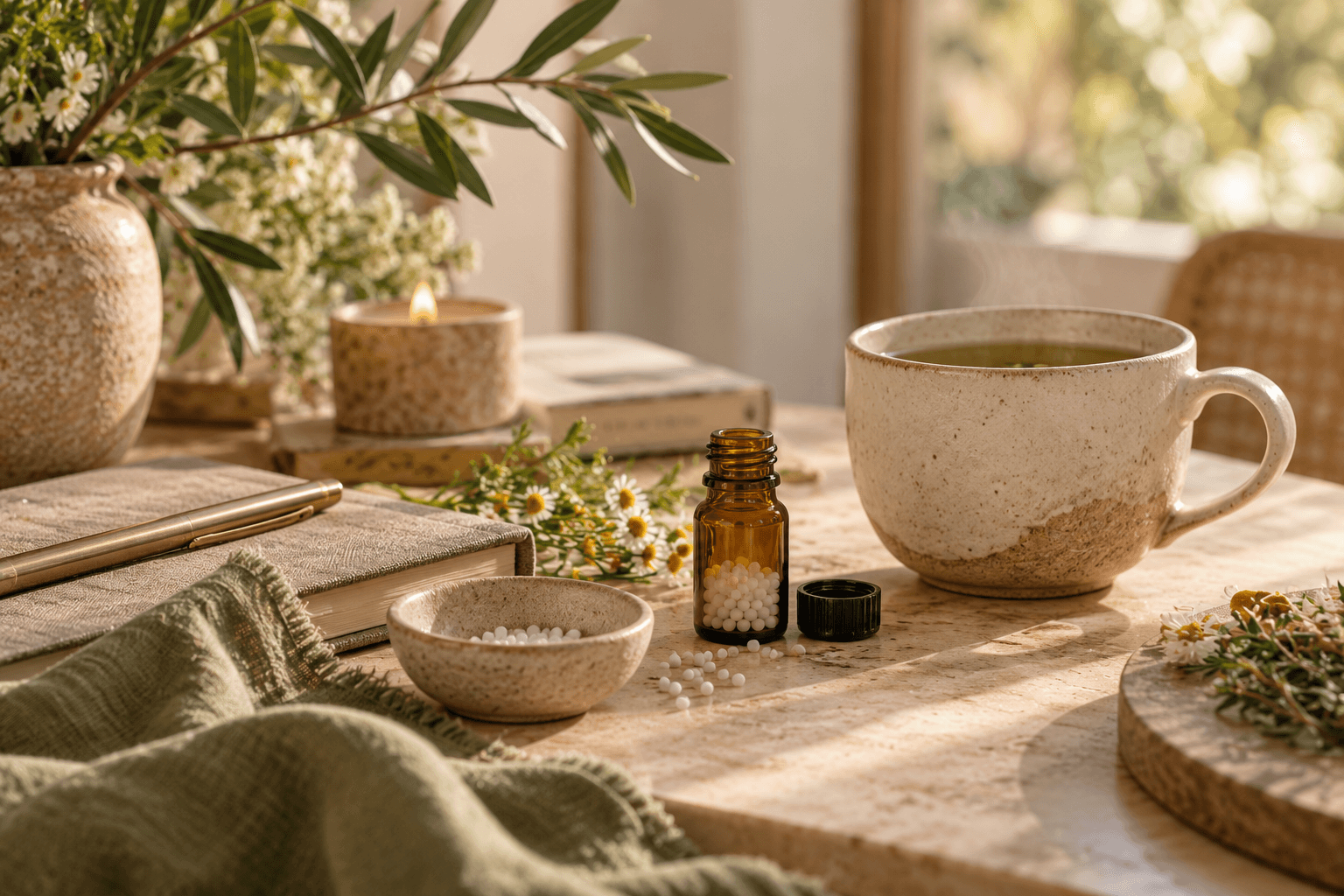
This Is Where Practical Homeopathy Gets Particularly InterestingAs a practical homeopath, one of the things I appreciate most about this system of medicine is its attention to the peculiar. We don’t merely ask what condition someone has. We pay attention to how that condition expresses itself. When does it happen? What precipitates it? What makes it better? What makes it worse? Is there something particularly distinctive about the circumstances surrounding the symptom? And “I can drive around for hours without a problem, but the moment I put my key in my front door I practically wet myself” is wonderfully, unmistakably peculiar. In practical homeopathy, Cantharis 30C is one of our important medicines for urinary complaints and is the protocol I would consider for this lock-and-key pattern. It is also commonly used in homeopathic protocols for urinary tract infections, particularly when intense urinary urgency is part of the picture. For lock-and-key syndrome, the practical homeopathy protocol is generally Cantharis 30C twice daily until the condition is noticeably and substantially improved, at which point the medicine is stopped. We use the medicine while it is needed rather than continuing it indefinitely after the presenting symptoms have resolved. What I find particularly compelling about this condition is the way it illustrates something homeopathy has always asked us to do: pay close attention to the body’s patterns. The fact that the urge appears at the driveway, in the elevator or at the front-door lock isn’t an irrelevant curiosity. The trigger matters. Your Pelvic Floor May Be Part of the Conversation, TooOf course, not every episode of urinary urgency has the same origin. The pelvic floor is an intricate group of muscles and connective tissues supporting the bladder, bowel, uterus and other pelvic structures. Pregnancy, childbirth, hormonal changes and menopause can all affect these tissues and the way they function. Pelvic-floor physical therapy can be valuable for women experiencing urinary leakage or urgency, particularly because pelvic-floor dysfunction doesn’t always mean weakness. Some women have muscles that are overly tense or poorly coordinated, which is one reason simply prescribing endless Kegels isn’t necessarily the answer. Bladder training and urge-suppression techniques can also be used to interrupt an established latchkey pattern. Rather than racing frantically toward the toilet the instant the urge arrives, the idea is to begin breaking the association between arriving home and immediately emptying the bladder. There’s something rather remarkable about that possibility. If the nervous system can learn an association, perhaps it can learn a new one. Sometimes the Bladder Is Telling Us Something ElseThere is an important distinction between a familiar lock-and-key pattern and a new or unexplained change in urinary function. A urinary tract infection, for example, can produce sudden urgency and frequency. Overactive bladder, pelvic-floor dysfunction and pelvic organ prolapse can also contribute to urinary symptoms. Burning or pain during urination, blood in the urine, fever, difficulty emptying the bladder, persistent leakage or a significant change in your normal bladder habits deserves further investigation rather than automatically assuming the front door is to blame. Pelvic organ prolapse deserves particular attention because it is another remarkably common women’s health concern that we don’t discuss nearly enough. It can affect bladder function, pelvic comfort, sexual health and quality of life, especially as women move through midlife. We’ll be talking about that here, too. Maybe the First Step Is Simply Losing the EmbarrassmentThere are aspects of being a woman that previous generations rarely discussed openly. Bladder leakage is one of them. Yet there is something immensely reassuring about discovering that the bizarre little thing your body has been doing has a name, a recognizable pattern and, perhaps most importantly, happens to plenty of other women. Women’s wellness shouldn’t be limited to what we eat, how often we exercise or which supplements are lined up on the kitchen counter. It should include becoming deeply literate in our own bodies. It should make room for different systems of medicine, healing traditions and our own careful observations of what our bodies are communicating. And it should allow us to talk about the things women experience without embarrassment or apology. So the next time you’re perfectly comfortable throughout an entire afternoon of errands only to find yourself doing the desperate pee-dance while wrestling with your front-door key, remember: You’re certainly not the only one. And perhaps your body isn’t behaving as mysteriously as it seems. It may simply know that you’re home. |
More from Resonant

Oct 2, 2026
Do You Know Where Your Food Comes From?
At Orlando’s 4Roots Farm, local food becomes an invitation to reconnect with the land, the seasons and the community that nourishes us.

Oct 1, 2026
The Altar as Technology
Why creating sacred space may be one of humanity’s oldest ways of entering into conversation with higher consciousness.

Sep 30, 2026
Sound as a Gateway to Altered States of Consciousness
What Happens When We Listen Beyond the Ordinary?
Sep 30, 2026
The Healing Power of Sound
What Happens During a Sound Bath?
0 Comments
Join the conversation
Be the first to comment
Share your thoughts above.