
Everoak Farm: What It Means to Grow Food Close to Home |
Just outside downtown Orlando, a three-acre family farm is cultivating a different relationship with food, bringing together regenerative agriculture, seasonal dining, and community. |
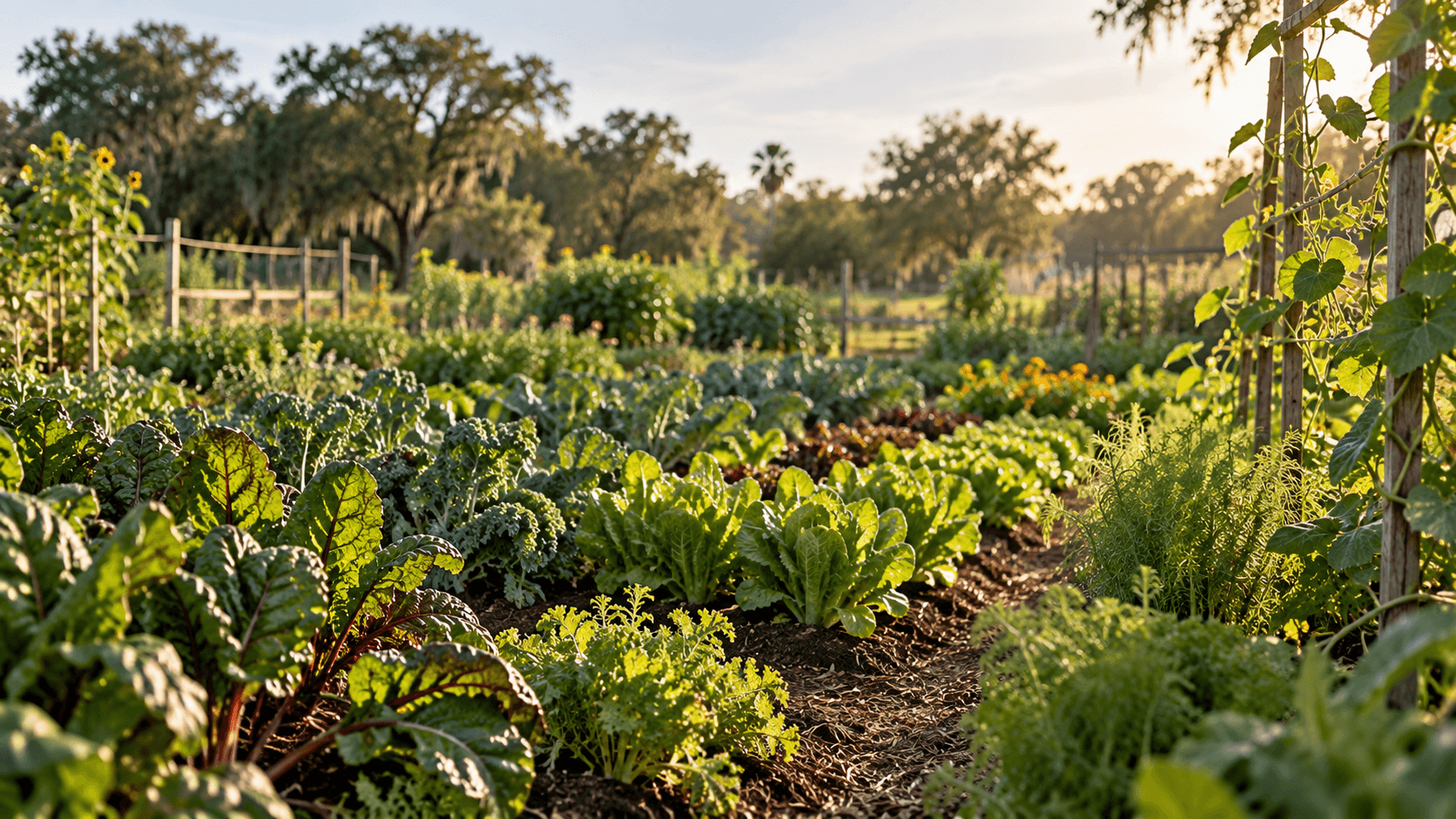
Most of us encounter food near the end of its journey. We select vegetables from grocery displays, bring them home, and prepare meals without necessarily knowing where the ingredients were grown or whose hands harvested them.
Yet just beyond Orlando's familiar neighborhoods, a different relationship with food is taking shape.
At Everoak Farm, Mike and Nikki Garcia operate a three-acre family farm near Baldwin Park, demonstrating how much can happen on a relatively small piece of land when soil health, biodiversity, and community guide the work.
Established in 2019, Everoak grows seasonal produce, raises poultry, keeps bees, and supplies local households and restaurant kitchens. Its modest footprint challenges the assumption that meaningful agriculture must take place on vast stretches of rural land.
A Farm That Works With Nature
Everoak's approach is rooted in regenerative agriculture and bio-intensive growing techniques, which emphasize healthy soil, ecological diversity, and the relationships between the living systems that support a harvest.
The farm uses compost to enrich its growing beds, raises chickens on pasture, and maintains beehives that contribute to its agricultural ecosystem. Its produce is Certified Naturally Grown, reflecting a commitment to growing without synthetic agricultural chemicals.
These practices express a simple but consequential idea: growing food should not require exhausting the environment that makes its production possible.
For the Garcias, farming is also a way of restoring a connection between the people who eat food and the living landscape from which it comes.
When the Farm Becomes the Dining Room
Perhaps one of Everoak's most compelling offerings happens when the day's agricultural work gives way to an entirely different experience.
During the cooler growing season, the farm has hosted intimate, educational farm-to-table dinners that invite guests to experience food at its source.
Rather than simply serving a meal featuring locally sourced ingredients, these gatherings bring diners onto the land itself. Guests have been able to tour the farm, learn about its growing practices, and enjoy thoughtfully prepared courses featuring ingredients harvested from the property.
In a 2024 Michelin Guide feature, Mike Garcia explained that approximately 90 percent of the food served during these dinners came directly from Everoak.
That distinction matters. The phrase farm-to-table has become so familiar that it can sometimes lose its meaning. At Everoak, the relationship between the farm and the table becomes immediate and tangible.
A vegetable is no longer an anonymous ingredient. It is something grown in the surrounding soil, tended through a particular season, and transformed into a meal through culinary knowledge.
These gatherings also create opportunities for conversation between growers, cooks, and guests. They remind us that sharing food can be an educational and communal experience as much as a culinary one.
Three Acres, Forty Acres, and a Shared Vision
Across Orlando, another agricultural initiative is approaching the future of food on a dramatically different scale.
The 4Roots Farm Campus, located in the Packing District, encompasses 40 acres devoted to advancing sustainable agriculture, education, food access, and innovation. Its facilities include growing spaces, a hydroponic greenhouse, and an education center designed to introduce visitors to the possibilities of regenerative food systems.
Everoak, by comparison, operates on just three acres.
The contrast is striking, but acreage alone tells us surprisingly little about the significance of either operation.
4Roots is developing a large-scale community and educational campus, while Everoak demonstrates the possibilities of an independently operated, family-run farm with direct relationships to its customers and local chefs.
Their work is not entirely separate. In June 2026, Everoak's Mike Garcia joined 4Roots' food-forest lead, Tyler Zaworski, for an educational workshop exploring food-forest design and regenerative growing practices.
The collaboration offers a valuable reminder that a resilient local food system depends on more than one agricultural model.
Large initiatives can provide infrastructure, education, and broad community engagement, while smaller farms contribute specialized knowledge, direct relationships, and a different kind of intimacy with the land.
Both approaches can help Central Florida develop a stronger relationship with the food it produces.
Learning the Rhythm of Central Florida
Florida's growing calendar differs considerably from the seasonal patterns many Americans associate with farming.
At Everoak, the principal produce season runs from October through June, when cooler conditions favor many vegetables that struggle during the intense summer heat.
Through its Community Supported Agriculture program, or CSA, households receive weekly shares of seasonal produce. The farm also welcomes the public to its Saturday farmstand during the growing season.
These arrangements invite customers to approach food differently.
Instead of expecting every ingredient to be available at every moment, they discover what is thriving locally and learn to prepare meals around the rhythms of the land.
An unfamiliar vegetable might inspire a new recipe, while the return of a favorite seasonal ingredient becomes something worth anticipating.
Nourishment Begins Before the Kitchen
At Resonant, we explore the relationships between awareness, daily choices, and the environments we inhabit.
Food offers one of the most tangible expressions of those connections.
The vegetables on our plates emerge from living soil, changing weather, insects, microorganisms, sunlight, water, and human effort. Every meal is the visible result of an intricate network of relationships.
Everoak Farm invites us to become more conscious of that network, whether by purchasing a weekly harvest, attending a farm dinner, or simply learning how food is grown in our own community.
Its three acres remind us that the significance of a place cannot be measured solely by its size.
Sometimes, a small farm can change the way an entire community thinks about nourishment. |
More from Resonant

Oct 10, 2026
What Happens When Women Become the Elders?
We have spent enormous cultural energy asking how a woman can remain young. Perhaps it is time to become equally fascinated by the extraordinary woman she is becoming.

Oct 9, 2026
Excuse Me, but My Yoni Is Not a Sword Sheath!
What the words we use for our most intimate anatomy reveal about language, feminine identity, and our relationship with our bodies.

Oct 9, 2026
What Do Women Know That Doesn't Fit on a Résumé?
By midlife, a woman may have accumulated an extraordinary body of knowledge that no credential, job title, or professional biography could ever adequately describe.
Oct 9, 2026
The Pleasure of Not Being Efficient
In a culture obsessed with optimization, there is something quietly rebellious about doing things simply because they make life more enjoyable.
0 Comments
Join the conversation
Be the first to comment
Share your thoughts above.