
Feminine Archetypes Are Mirrors, Not Instructions |
Myth can help us recognize neglected qualities without asking us to squeeze an entire woman into one identity. |

Somewhere between arranging everyone’s calendar and remembering what is running low in the refrigerator, you encounter a quiz promising to reveal your feminine archetype. Apparently, the woman who cannot be adequately described in a two-page biography can now be explained in six clicks.
The attraction is understandable. Feminine archetypes offer images for qualities we recognize but may struggle to name: the woman who creates, protects, nurtures, leads, seeks solitude, or insists on truth. Used thoughtfully, those images can open a conversation with ourselves.
The trouble begins when a mirror becomes another set of instructions.
What an Archetype Can Offer
An archetype is a recurring symbolic pattern, not a complete description of an individual. In her work with Greek goddess imagery, psychiatrist and Jungian analyst Jean Shinoda Bolen explores how myth can illuminate inner patterns and their gifts and difficulties.
Her books and recorded conversations provide one influential approach. They are not a universal catalogue of womanhood, and contemporary systems do not all use the same figures or categories.
We can therefore approach an archetype as an invitation to notice, rather than a verdict about who we are. The question becomes less about finding the correct label and more about recognizing what a particular image helps us see.
You Can Recognize More Than One
Consider a woman who manages a business, cares for an aging parent, and secretly misses painting. Her capacity to lead does not cancel her tenderness. Her devotion to family does not erase her creative appetite.
Perhaps the image of a creator helps her recognize something she has neglected. Perhaps a protector reminds her that conviction belongs in her life alongside accommodation. Neither requires her to discard the woman she has already been.
This is where archetypal language can become genuinely useful. It gives an overlooked quality a recognizable shape without demanding that the whole person shrink to fit it.
You might identify strongly with an image today and find another more illuminating next year. That can reflect changing circumstances and fuller expression, rather than an identity you have somehow outgrown incorrectly. |
 Photo by PNW Production on Pexels. Illustrative stock photograph; not a reported local scene. |
Notice the Qualities You Permit
A more revealing exercise than another quiz might be to ask which qualities you readily allow yourself to express. Are you comfortable being competent but uneasy being playful? Can you offer care without embarrassment, yet struggle to receive it?
Notice, too, which qualities you admire in other women and immediately disqualify in yourself. You may appreciate another woman’s decisiveness while describing your own as difficult. You may celebrate her creativity while treating yours as an indulgence.
An archetype cannot settle those questions for you. It can make them harder to overlook, which is often a useful beginning.
Bring the Image Into Ordinary Life
Choose one quality that feels familiar but underexpressed. Give it a small, specific place in your week: an hour with clay, a decision made without polling the group chat, or an evening of quiet that does not require an elaborate justification.
Write down what you chose and how it felt. Did the action seem natural, unfamiliar, enjoyable, or unexpectedly uncomfortable? Let the experience teach you more than the label.
Bolen’s work offers a path for further exploration, particularly if mythology speaks to you. Keep your own discernment present while you read, and remember that symbolism can support inquiry without becoming an authority over your life.
You do not need to audition for a more convincing version of femininity. The point is to recognize more of your own range, then allow that recognition to influence how you actually live. |
More from Resonant
Oct 24, 2026
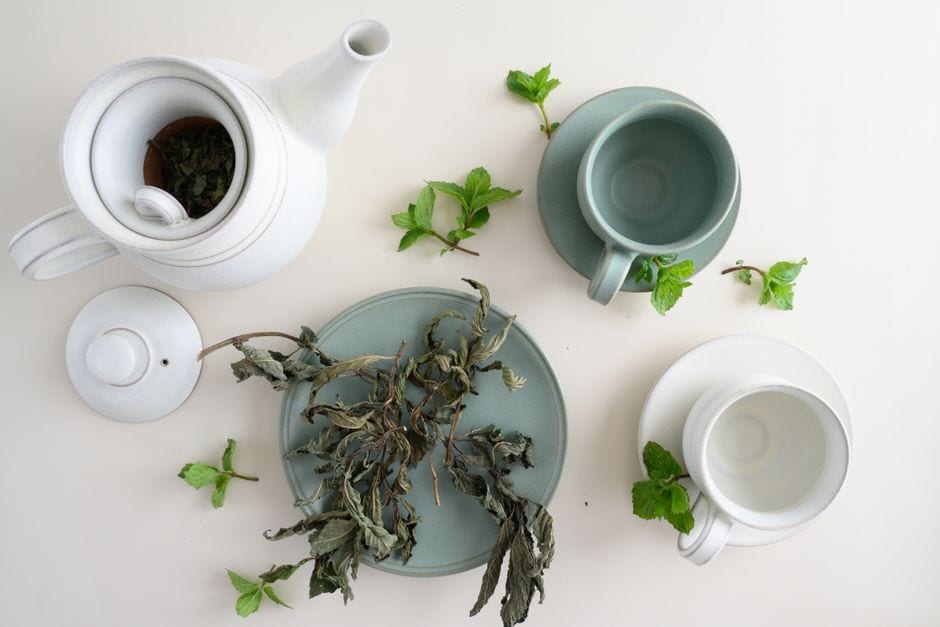
An Herbal Tea Garden Can Begin With One Pot
Grow a little of what fills your cup, and let tending, harvesting, and brewing become everyday practices of presence and gratitude.

Oct 23, 2026
Mirror Work Does Not Require You to Lie to Yourself
A reflective practice can begin with recognition rather than forced positivity or promises of instant healing
Oct 23, 2026
A Morning Ritual Should Return You to Yourself
A gentle practice for beginning the day with attention before the world begins making requests

Oct 23, 2026
Ecstatic Dance Invites the Body Back Into the Conversation
What to expect from free-form conscious dance, and how to enter an Orlando-area gathering with curiosity and consent
0 Comments
Join the conversation
Be the first to comment
Share your thoughts above.