
Mindful Movement Begins With Paying Attention |
A gentle practice can change your relationship with movement before you measure a single step or calorie. |
You can finish a walk around the neighborhood and realize you spent most of it conducting an imaginary meeting. Your body made it around the block, but your attention remained occupied elsewhere.
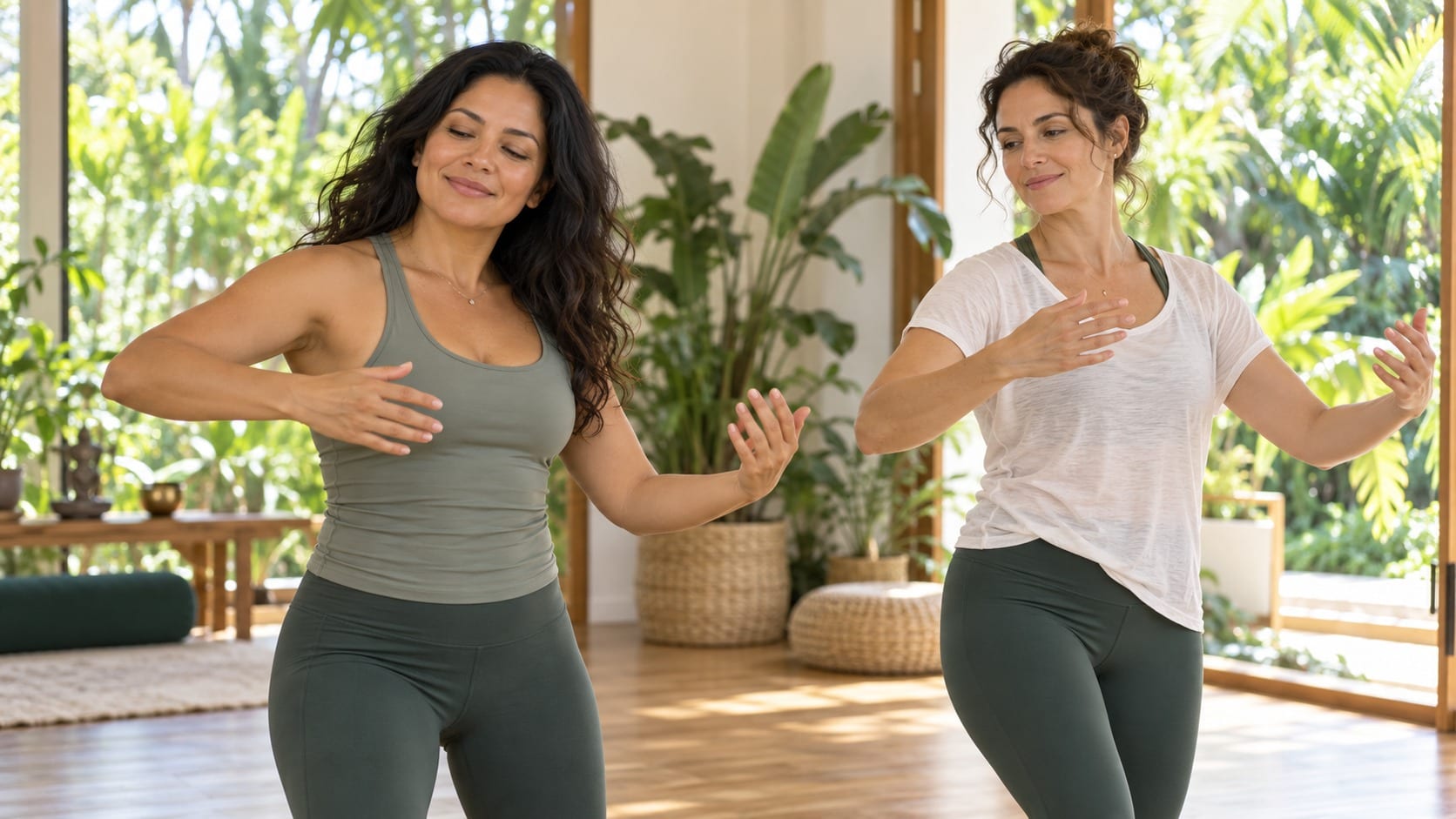
Mindful movement asks you to participate differently. Rather than using movement only to reach a target, you notice what moving actually feels like. The pace, breath, contact with the floor, and changing sensations become part of the experience.
For a woman accustomed to measuring what her body accomplishes, that shift can be surprisingly unfamiliar.
Attention Is the Starting Point
Yoga, tai chi, and qigong offer different ways to explore movement with attention. You can also begin with an ordinary stretch, a slow walk, or the simple act of opening your hands. What matters here is noticing your experience as it unfolds.
The common thread is attention, not a required level of flexibility. This is not a promise that moving slowly will resolve a health concern, and it does not replace strength training, medical care, or other activity you need.
For a practical introduction, Mindful’s guide to getting started with mindful movement explores how walking, stretching, and other familiar activities can become opportunities to notice your breath and the sensations of moving.
It is a way of being present while you move. You can explore that relationship without turning every experience into another metric.
Begin Where You Are Comfortable
Choose a supported position that feels steady and familiar. Before changing anything, notice where your body meets the chair or floor and what you can see around you.
If comfortable, make a small movement you already know is suitable for you, perhaps opening and closing a hand. Notice the beginning, the movement itself, and the moment it ends. Let your breathing remain easy rather than forcing a special pattern.
Then pause. What did you notice about the sensation, your attention, or the impulse to hurry?
You are not trying to achieve a particular feeling. A distracted moment is something to recognize, not evidence that you are doing the practice incorrectly. |
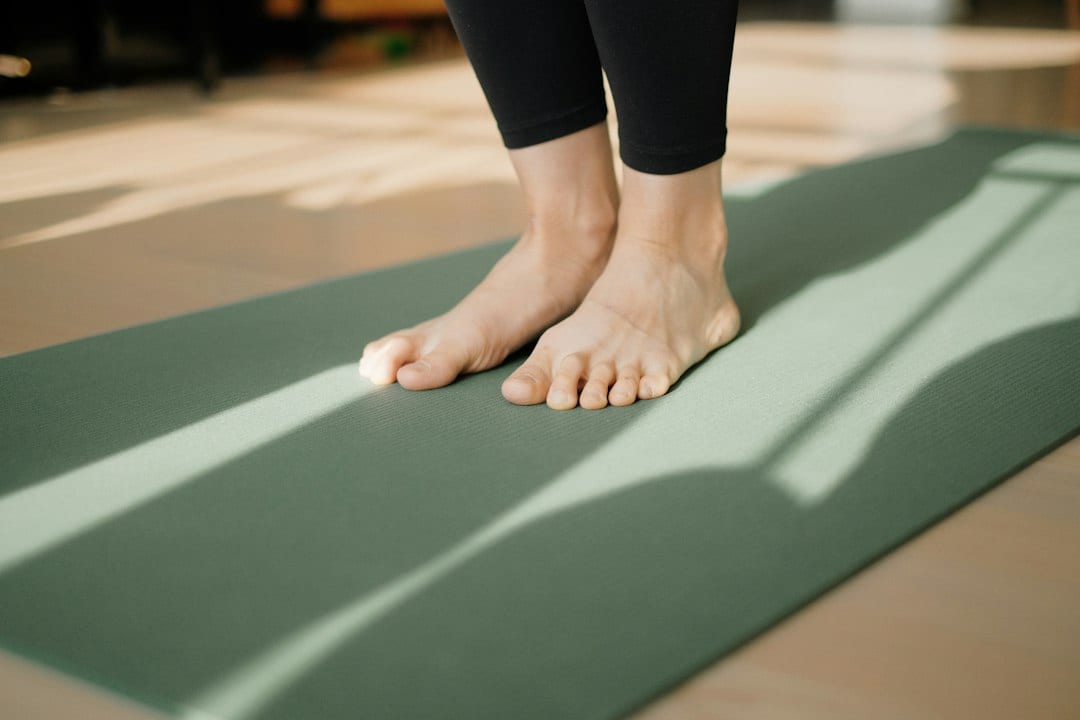 Photo by Junseong Lee on Unsplash. Illustrative stock photograph; not a reported local scene. |
You can finish a walk around the neighborhood and realize you spent most of it conducting an imaginary meeting. Your body made it around the block, but your attention remained occupied elsewhere.
Mindful movement asks you to participate differently. Rather than using movement only to reach a target, you notice what moving actually feels like. The pace, breath, contact with the floor, and changing sensations become part of the experience.
For a woman accustomed to measuring what her body accomplishes, that shift can be surprisingly unfamiliar.
Attention Is the Starting Point
Yoga, tai chi, and qigong offer different ways to explore movement with attention. You can also begin with an ordinary stretch, a slow walk, or the simple act of opening your hands. What matters here is noticing your experience as it unfolds.
The common thread is attention, not a required level of flexibility. This is not a promise that moving slowly will resolve a health concern, and it does not replace strength training, medical care, or other activity you need.
For a practical introduction, Mindful’s guide to getting started with mindful movement explores how walking, stretching, and other familiar activities can become opportunities to notice your breath and the sensations of moving.
It is a way of being present while you move. You can explore that relationship without turning every experience into another metric.
Begin Where You Are Comfortable
Choose a supported position that feels steady and familiar. Before changing anything, notice where your body meets the chair or floor and what you can see around you.
If comfortable, make a small movement you already know is suitable for you, perhaps opening and closing a hand. Notice the beginning, the movement itself, and the moment it ends. Let your breathing remain easy rather than forcing a special pattern.
Then pause. What did you notice about the sensation, your attention, or the impulse to hurry?
You are not trying to achieve a particular feeling. A distracted moment is something to recognize, not evidence that you are doing the practice incorrectly. |
More from Resonant

Oct 24, 2026
An Herbal Tea Garden Can Begin With One Pot
Grow a little of what fills your cup, and let tending, harvesting, and brewing become everyday practices of presence and gratitude.

Oct 23, 2026
Mirror Work Does Not Require You to Lie to Yourself
A reflective practice can begin with recognition rather than forced positivity or promises of instant healing

Oct 23, 2026
A Morning Ritual Should Return You to Yourself
A gentle practice for beginning the day with attention before the world begins making requests

Oct 23, 2026
Ecstatic Dance Invites the Body Back Into the Conversation
What to expect from free-form conscious dance, and how to enter an Orlando-area gathering with curiosity and consent
0 Comments
Join the conversation
Be the first to comment
Share your thoughts above.