
Moon Journaling Without Another Self-Improvement Deadline |
Use the lunar cycle as a gentle rhythm for observation, intention, and reflection, rather than a test you can fail. |

Step outside on an ordinary Central Florida evening and there may be something worth noticing above the driveway. While the household calendar insists that everything is urgent, the Moon continues its quieter progression. It offers a different rhythm to return to.
Moon journaling pairs observation of that cycle with a recurring writing practice. You notice the sky, record something about your inner life, and revisit what you wrote. A beautiful notebook is welcome, but it is not a prerequisite for admission.
Begin With What You Can Observe
NASA describes eight lunar phases, with a new-moon-to-new-moon cycle lasting about 29.5 days. The changing appearance reflects our view of the Moon’s sunlit portion as it travels around Earth.
That astronomical cycle can provide the structure for a personal ritual. The meanings you give its phases belong to your reflective or spiritual practice; they are not instructions NASA is issuing about your emotions.
Start by recording the date, the phase, and whether you could actually see the Moon. Clouds count as an observation. In Florida, excluding them would leave rather unnecessary gaps in the record.
Then write a few honest lines about what has your attention.
Let Four Moments Be Enough
You do not have to produce an entry for every phase. Four check-ins can offer a manageable beginning: new Moon, first quarter, full Moon, and last quarter. Use a reliable phase guide rather than relying on the sky to look a particular way.
At the new Moon, ask what deserves a little more room in your life. Choose an intention small enough to meet in ordinary circumstances, such as protecting one unhurried meal or returning to a neglected creative practice.
Around first quarter, consider what that intention needs from you. Perhaps enthusiasm needs a calendar appointment, or a promise needs a boundary. An intention becomes more interesting when it encounters Tuesday. |
 Photo by malith d karunarathne on Unsplash. Illustrative stock photograph; not a reported local scene. |
Reflection Is More Than Releasing
At the full Moon, look at what has become clearer. What did you actually do? What felt nourishing? What were you hoping would happen without requiring a choice from you?
You may also want to acknowledge something worth celebrating. A reflective practice need not become an elegant system for documenting your shortcomings.
At last quarter, consider what you can simplify, complete, or stop carrying into the next cycle. Sometimes release means relinquishing an expectation. Sometimes it means sending the email you have rehearsed internally for three weeks.
These are suggested prompts, not a fixed spiritual formula. Change them when another question feels more truthful.
A Woman’s Moon Time and Her Inner Seasons
For many women, the Moon offers a particularly intimate point of reflection because our own bodies may move through a cycle of changing energy, sensation, and attention. The expression moon time has been used in some Native American communities in reference to menstruation, often within teachings that recognize this time as deserving of respect and care. Indigenous Nations have distinct traditions, however, and no single account speaks for them all.
The lunar cycle averages approximately 29.5 days, while menstrual cycles vary considerably from woman to woman. The two are not necessarily synchronized. Their relationship can nevertheless offer a rich contemplative framework: an invitation to observe recurring rhythms without insisting that the body obey the calendar in the sky.
One way to begin is to think of the menstrual cycle as a succession of inner seasons. These are invitations to notice, not rigid descriptions of what every woman will experience. Hormones, health, life circumstances, and individual temperament all shape the experience of each phase.
The Inner Winter: Menstruation and the New Moon
Menstruation can be approached as an inner winter, a time when some women feel drawn toward quiet, privacy, and a less demanding pace. The new Moon, with its darkened sky, offers a natural companion for reflection on beginnings that have not yet taken visible form. Rather than using the journal to demand another achievement, ask: What am I hearing when I become quiet? What deserves rest? What truth have I been too busy to acknowledge?
A woman who feels energetic and sociable during menstruation has not failed to honor her cycle. The point is to listen to the body she inhabits, rather than impose a borrowed script upon it.
The Inner Spring: The Follicular Phase and the Waxing Moon
As menstruation ends and the follicular phase progresses, rising estrogen may coincide for some women with renewed energy, curiosity, or a desire to begin. The waxing Moon offers an evocative image of emergence. This can be a lovely time to journal about ideas, creative impulses, or relationships that are asking for attention.
Questions might include: What is beginning to stir within me? Where do I feel genuine enthusiasm? What would I like to explore without immediately turning it into an obligation?
The Inner Summer: Ovulation and the Full Moon
Around ovulation, some women notice greater sociability, confidence, or outward-facing energy, although others experience little change or feel physically uncomfortable. The full Moon provides a symbolic moment of illumination: a chance to acknowledge what is visible, expressed, and ready to be celebrated.
Rather than measuring your worth by how productive or magnetic you feel, consider: Where am I expressing myself freely? What deserves to be witnessed or celebrated? Where am I sharing my gifts in ways that feel nourishing rather than depleting?
The Inner Autumn: The Luteal Phase and the Waning Moon
After ovulation, the luteal phase brings another hormonal transition. Some women experience a stronger need for boundaries, greater sensitivity, or a sharper awareness of what feels unsustainable; others notice few changes. The waning Moon offers a useful companion for discernment and completion.
A journal entry might ask: What feels out of alignment? What am I carrying that no longer belongs to me? Which commitments need adjustment? What have I learned about the conditions in which I flourish? Sensitivity need not be dismissed as inconvenience. It can be an invitation to pay attention, while remembering that persistent or severe symptoms deserve care.
When the Menstrual Cycle Ends, the Wisdom of Cycles Remains
Perimenopause can make familiar menstrual rhythms unpredictable, and menopause eventually brings the end of menstruation. Yet this transition need not sever a woman's relationship with cyclical reflection. In some ways, it creates an opportunity to engage the Moon more intentionally, without expecting her body's calendar to mirror it.
A woman in menopause can use the new Moon to turn inward and listen for what is emerging, the waxing Moon to nurture an intention, the full Moon to honor expression and illumination, and the waning Moon to practice discernment, completion, or rest. These are not substitutes for a menstrual cycle; they are chosen moments of attention within the ongoing movement of her life.
There is also a beautiful shift in perspective here. The wisdom accumulated through decades of living does not disappear with a woman's last period. Her relationship with her body, intuition, creativity, and sense of purpose may continue to deepen and change. She does not need to become someone else in order to honor this next iteration of herself.
Whether she menstruates regularly, experiences an irregular cycle, no longer menstruates, or has never had a predictable monthly rhythm, the journal remains available to her. She can record the lunar phase alongside her energy, mood, sleep, desires, and recurring themes, then look back over several months for patterns that are uniquely her own.
The Moon can mark time. The woman herself gives meaning to what she notices.
Keep Your Experience Larger Than the Pattern
You might notice recurring moods or habits while keeping a journal. Record them with curiosity, alongside ordinary influences such as sleep, workload, relationships, and what happened that day.
You can find the lunar cycle spiritually meaningful without requiring every feeling to be explained by it. The notebook is a place for observation, not a courtroom in which the Moon must account for your entire week.
If a particular ritual belongs to a tradition you practice, learn its context from a trustworthy teacher rather than assuming that all lunar customs are interchangeable.
Return Without Catching Up
Missed a phase? Begin with the one you are in. There is no reflective homework debt, and nobody benefits from manufacturing three weeks of retrospectively enlightened entries.
Use NASA’s phase information and Daily Moon Guide to orient yourself, then let the writing remain personal. After one cycle, read back through your entries and choose one thing you want to continue.
The value may be less about discovering a dramatic pattern than developing a dependable habit of returning to your own attention. |
More from Resonant
Oct 24, 2026
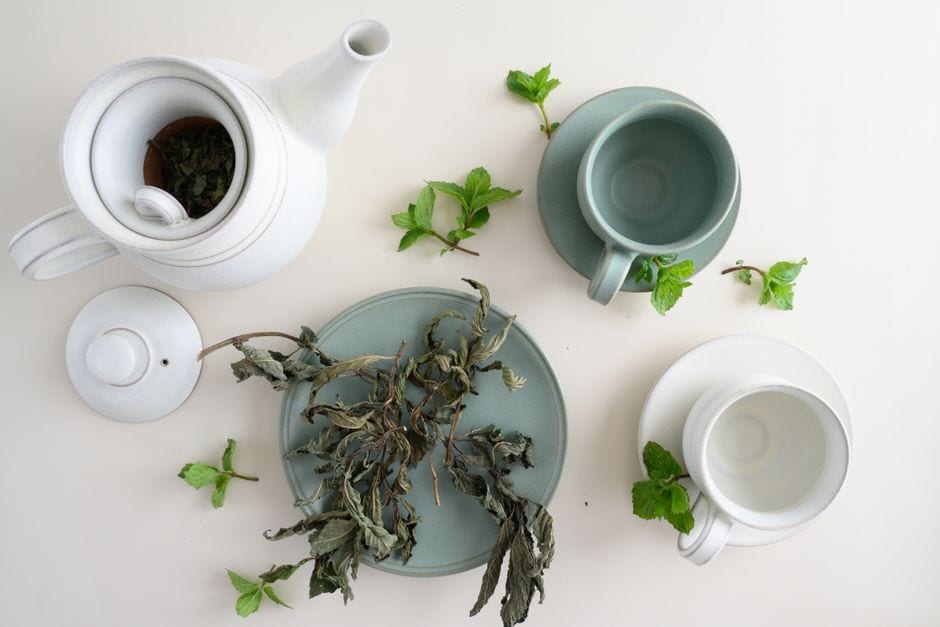
An Herbal Tea Garden Can Begin With One Pot
Grow a little of what fills your cup, and let tending, harvesting, and brewing become everyday practices of presence and gratitude.

Oct 23, 2026
Mirror Work Does Not Require You to Lie to Yourself
A reflective practice can begin with recognition rather than forced positivity or promises of instant healing
Oct 23, 2026
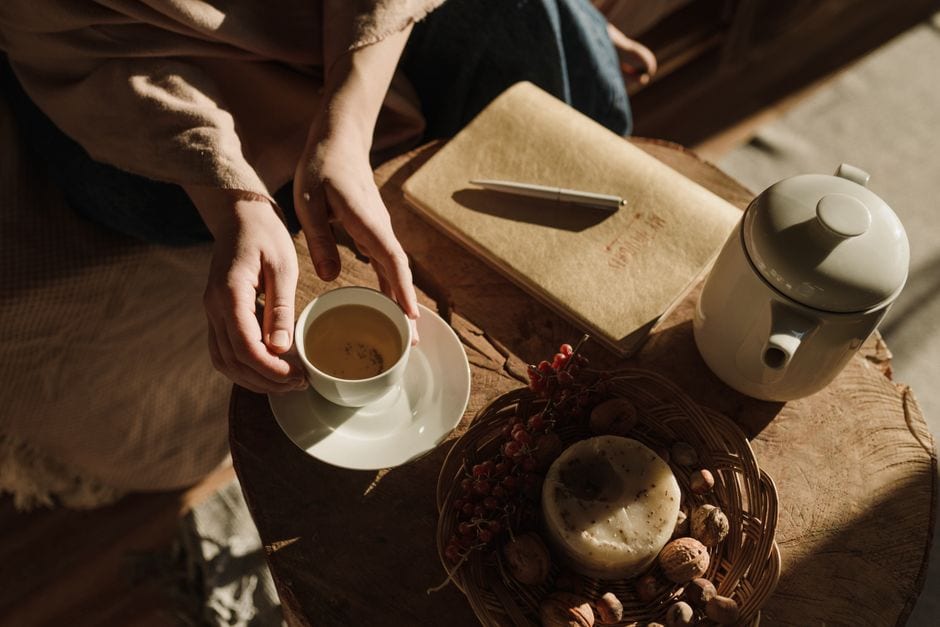
A Morning Ritual Should Return You to Yourself
A gentle practice for beginning the day with attention before the world begins making requests

Oct 23, 2026
Ecstatic Dance Invites the Body Back Into the Conversation
What to expect from free-form conscious dance, and how to enter an Orlando-area gathering with curiosity and consent
0 Comments
Join the conversation
Be the first to comment
Share your thoughts above.