
The Women Who Fed Us |
What We Inherit From the Women Who Nourished Us Goes Far Beyond Their Recipes |
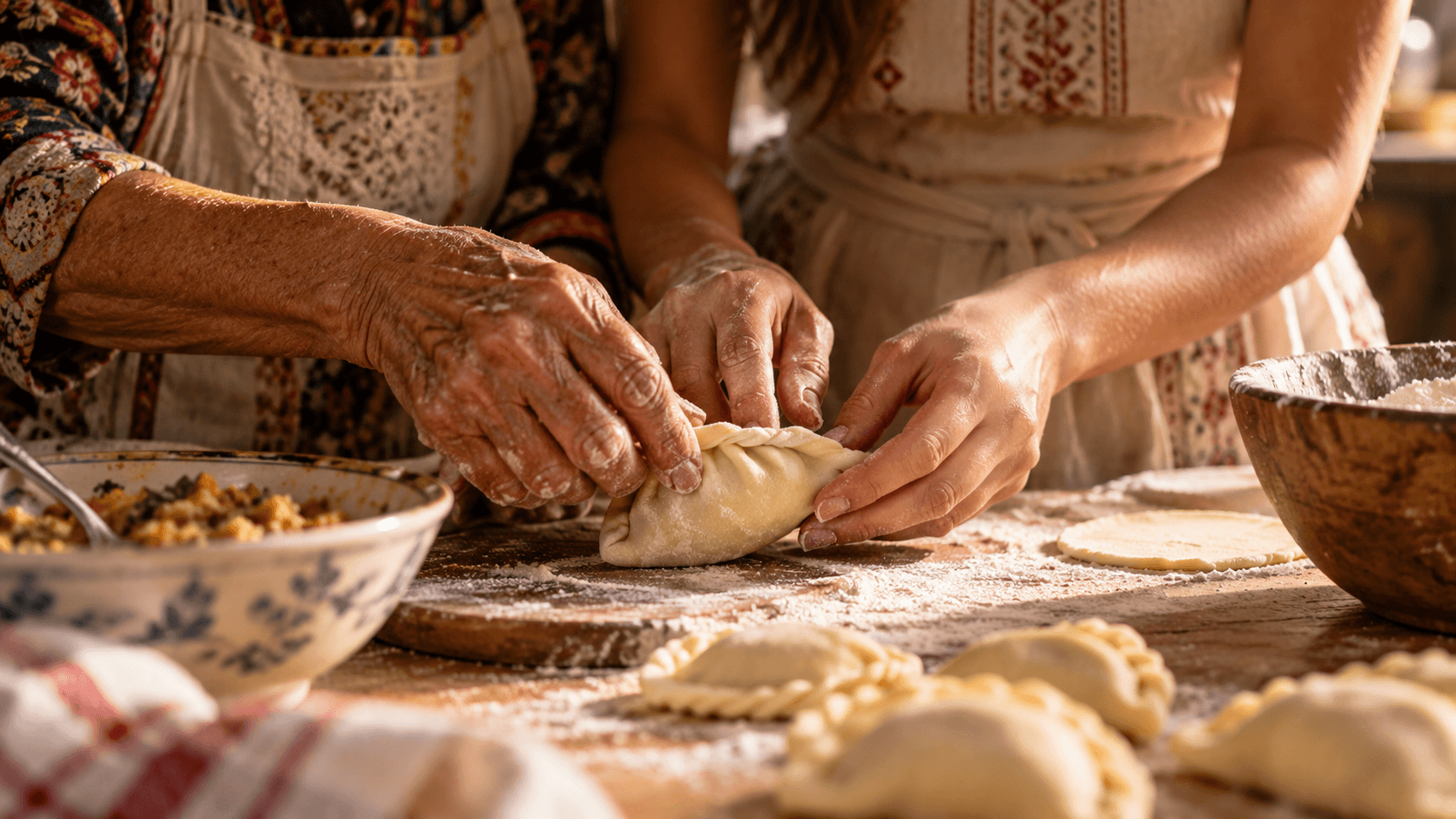
Some recipes survive because someone wrote them down. Others endure because someone stood beside a mother, grandmother, aunt, or neighbor and paid attention.
The difference matters. A written recipe can tell us how much flour to use, but it cannot always convey the pressure of a hand against dough, the scent that signals a sauce is ready, or the quiet confidence of a cook who has never needed a measuring spoon.
When we remember the women who fed us, we are remembering more than their meals. We are remembering ways of knowing that traveled through the body, the senses, and the ordinary rhythms of family life.
The Knowledge That Lives in Our Hands
In many households, the kitchen was one of our first classrooms. Children learned by watching vegetables being prepared, tasting a simmering pot, and noticing how a familiar dish changed when guests arrived unexpectedly.
Alongside the techniques came lessons in resourcefulness, generosity, celebration, and belonging. A meal might reveal what grew in a family's homeland, which ingredients were affordable, or how people adapted during difficult times.
Much of this knowledge was never formally recognized. Yet knowing how to nourish a household, stretch ingredients, or recreate a cherished flavor requires observation, judgment, memory, and skill.
When a woman who carried that knowledge transitions into nonphysical, the loss can be startlingly specific. Someone may still remember the dish, but not the way she prepared it. The recipe remains almost within reach, and that small distance can feel enormous.
A World of Kitchens in Central Florida
Across Greater Orlando, families are carrying culinary histories from Puerto Rico, Haiti, Jamaica, Cuba, Venezuela, Panama, Colombia, Serbia, Vietnam, and many other places. Those histories do not disappear when people establish new homes. They find expression in grocery lists, holiday gatherings, Sunday lunches, and recipes taught to children growing up here.
Imagine a family table where Panamanian, Colombian, and Serbian traditions meet. The dishes need not share an origin to share a home. Each brings its own history of ingredients, seasons, migration, and celebration, while the next generation develops memories that belong to all of them.
That is one of the remarkable things about Central Florida's cultural life: inheritance is not only preserved here; it is continually reshaped. A family may substitute an ingredient available locally, shop at a neighborhood market for a familiar spice, or combine foods from different branches of its family tree.
These adaptations are not necessarily departures from tradition. They can be evidence that a tradition is still alive.
Where Family Recipes Find Their Ingredients
For families whose histories cross borders, preserving a recipe often begins before anyone turns on the stove. It begins with finding the ingredients that make a familiar dish taste the way we remember it.
Across Central Florida, international grocers, neighborhood butcher shops, and specialty markets make those connections possible. At Lotte Plaza Market and H Mart, families can seek out ingredients central to Vietnamese, Korean, and other Asian kitchens. At the Meat Emporium, familiar cuts of meat, pantry staples, and regional specialties help sustain traditions carried from Latin America.
Balkan markets such as Aniko and Tima's House offer another kind of homecoming for families searching for the ingredients of Serbian and neighboring culinary traditions. A particular cheese, pastry ingredient, or preserved food can bring a remembered family table unexpectedly close.
In East Orlando, Alexandria Market deserves particular attention as a woman-owned Middle Eastern grocery. By making ingredients associated with Middle Eastern cooking accessible to local families, the market reflects another way women help sustain culinary heritage: not only by preparing family meals, but by making culturally significant foods available to the wider community. The work of nourishment can extend beyond the household and into the marketplace.
A shopping trip can also become an informal lesson in inheritance. A mother may explain why one ingredient matters, how to recognize the right variety, or which substitution changes the character of a dish. A child may remember that conversation years later while shopping for the same recipe.
These markets are more than convenient places to buy groceries. They help families preserve a sensory connection to their histories while introducing neighbors to the foods and customs of other cultures. In Central Florida, the ingredients of countless family stories are waiting to be gathered and carried home.
When Food Awakens Memory
There is a reason a familiar aroma can return us so vividly to a particular kitchen. Smell is closely connected with brain systems involved in emotion and memory, and food often gathers several senses into a single experience.
The scent of onions cooking, the sound of a spoon against a pot, or the first taste of a childhood dish can summon details we had not consciously recalled in years. We may remember the light in a room, the voices around a table, or the presence of someone we miss.
This is where nourishment meets consciousness. Cooking with attention allows us to notice that an ordinary action can also be an encounter with memory. We become aware of what our bodies recognize, whose gestures we repeat, and which stories accompany the food we prepare.
That awareness does not require making every meal ceremonial. It might begin with asking why a certain dish matters, inviting an older relative to explain a technique, or simply noticing the memories that arise while preparing something familiar.
Honoring the Women Without Romanticizing the Work
Celebrating culinary inheritance also requires honesty about the labor behind it. For many women, cooking was an expectation rather than a choice. The meals that anchored family life were often prepared alongside paid work, childcare, and other responsibilities that received little recognition.
Some women loved to cook; others did it because everyone needed to eat. Many felt both affection and exhaustion. We can value what they gave without assuming that care should always have been theirs to provide.
The most meaningful inheritance may therefore include both the recipes and a different understanding of responsibility. Children of every gender can learn the skills, stories, and generosity involved in feeding others.
What We Choose to Carry Forward
Preservation does not demand perfect replication. A recipe may change with a new country, a different season, or the preferences of the people gathered around the table. What deserves our attention is the relationship between the food and the people who gave it meaning.
Ask someone how she learned to make a favorite dish. Write down what she remembers, but watch her hands, too. Find out when the family ate it, who taught it to her, and what she changed along the way.
These conversations can reveal histories that would never appear in a conventional family record. They also allow younger generations to decide consciously what they want to preserve, reinterpret, or release.
The women who fed us did more than place food on a table. Through countless ordinary acts, they helped shape our sense of home. When we approach that inheritance with curiosity and care, their knowledge becomes more than something we remember. It becomes something we can share. |
More from Resonant

Oct 10, 2026
Where Orlando Goes to Be Quiet
Explore Orlando's peaceful places through nature, grounding, nervous-system restoration, and our relationship with Earth's rhythms.
Oct 10, 2026
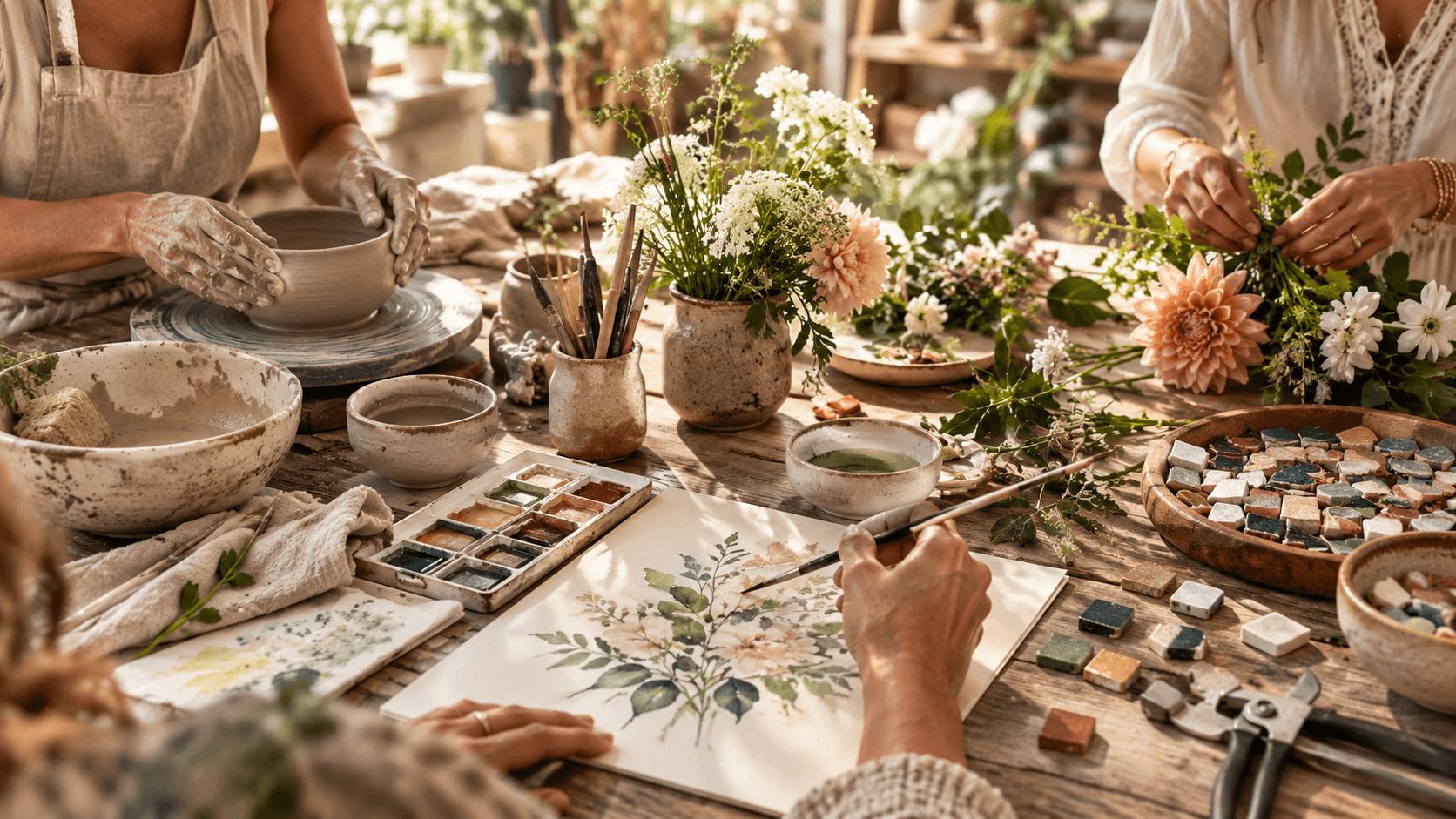
Where Orlando Goes to Make Something Beautiful
From pottery and painting to floral design and mosaic art, discover creative experiences across Central Florida that invite you to make something beautiful with your own hands.

Oct 10, 2026
Alignment Is Not What You Think: The Forgotten Meaning of Spiritual Alignment
True spiritual alignment begins when our thoughts, emotions, words, and actions become coherent, and deepens when our personal will comes into harmony with the wisdom of our Higher Self.

Oct 10, 2026
The Unseen Cost of Unconscious Speech: BioAwareness™ and the Language We Carry
What happens when we become so accustomed to speaking the language of war that we no longer recognize it in our everyday lives?
0 Comments
Join the conversation
Be the first to comment
Share your thoughts above.