
Sacred Geometry Is Not What You Think |
Beyond the familiar symbols lies an ancient understanding of divine thought, the language of creation, and the patterns through which Spirit manifests into form. |
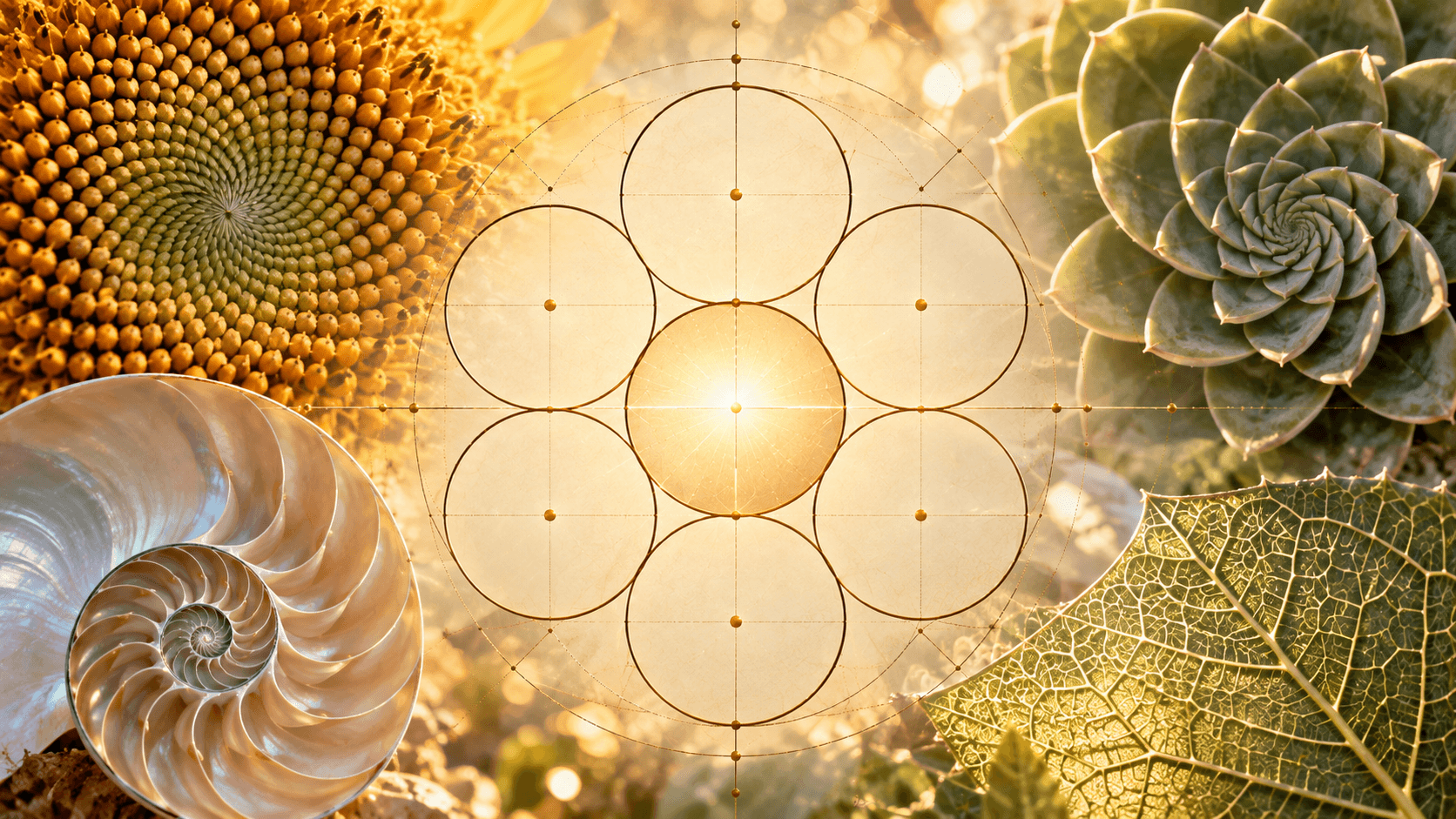
The term sacred geometry has become a familiar part of contemporary spiritual vocabulary. We encounter it on jewelry, meditation accessories, clothing, tattoos, and countless images circulating throughout social media. Intricate geometric patterns are presented as symbols of spiritual awakening, energetic harmony, and universal consciousness, often with little explanation of what they represent or why they have been considered sacred. Yet how often do we stop to ask what sacred geometry actually means? Recognizing the Flower of Life, wearing a six-pointed star, or displaying an elaborate geometric design does not necessarily mean that we understand the principles these forms are intended to express. We may become familiar with the symbols while remaining largely unfamiliar with the teachings behind them. This distinction matters because sacred geometry is concerned with something considerably more profound than beautiful shapes or spiritually inspired decoration. At its heart is an understanding of the relationship between divine consciousness, the emergence of form, and the processes through which the invisible becomes manifest in the physical world. To study sacred geometry is to begin learning the language of creation itself. Geometry: The Measurement of the Earth Before we can understand what makes geometry sacred, we must first understand what geometry means. The word originates from the ancient Greek gē, meaning Earth, and metron, meaning measure. Geometry literally means the measurement of the Earth. This etymology offers an important starting point because geometry allows us to understand the dimensions, proportions, relationships, and structures through which the physical world is organized. From the boundaries of a field to the architecture of a temple, geometric principles allow us to recognize and measure the relationships between physical forms. When we introduce the word sacred, however, our inquiry extends beyond the measurement of the material world to the spiritual principles underlying its manifestation. Sacred geometry concerns the relationship between the invisible intelligence of creation and the visible forms through which that intelligence expresses itself. In this understanding, the shapes and proportions found throughout nature are not merely decorative features of existence. They are expressions of the deeper principles through which Spirit manifests within the material world. To understand sacred geometry, therefore, is to explore the relationship between the creative intelligence of the universe and the structures through which creation becomes visible. The Original Thought-Form of Creation One of the foundational teachings within sacred geometry concerns the relationship between divine thought and the emergence of form. In my early studies, I encountered a particularly illuminating explanation of this process through the arrangement of seven circles. At the center is a single circle representing the original divine thought-form, the creative consciousness from which manifestation proceeds. Surrounding this central circle are six additional circles, representing six emanations arising from that original divine thought. This sevenfold arrangement offers a geometric representation of the movement from unity into multiplicity. The central circle represents the originating consciousness, while the six emanations express the unfolding of that consciousness into increasingly differentiated forms. The sixfold structure also relates symbolically to the six-pointed star, a figure associated with the relationship between complementary forces and the union of different dimensions of existence. What makes this teaching particularly profound is that creation is understood to begin not with physical matter, but with consciousness. The originating thought precedes the form through which it will eventually become expressed. Within this understanding, geometry reveals the patterns through which the creative impulse unfolds from its original state into the structures of manifested existence. The seven circles are therefore far more than an aesthetically pleasing arrangement. They offer a visual language through which we can contemplate the relationship between divine thought, emanation, and creation. Sacred Geometry as the Divine Alphabet One of the most compelling ways to understand sacred geometry is to consider its relationship to language. When we first learn to read, we begin with individual letters. We study their shapes, recognize their differences, and gradually learn how they combine to form words. As our understanding develops, words become sentences, sentences communicate ideas, and entire worlds of meaning become accessible through the written language. Sacred geometry can be approached in much the same way. The individual geometric forms are comparable to letters within a divine alphabet. A circle, triangle, square, spiral, or other foundational shape expresses particular principles and relationships. As these forms interact, increasingly complex patterns emerge. Much as individual letters combine to create words, fundamental geometric relationships combine to create the structures through which the natural world expresses itself. In this sense, sacred geometry is not simply the study of isolated shapes. It is the study of the relationships between those shapes and the larger patterns that emerge from their interaction. The more familiar we become with this geometric language, the more capable we become of recognizing the patterns of creation. We begin to read what previously appeared to us as ordinary form. From Divine Thought to Physical Manifestation Within the spiritual understanding of sacred geometry, creation is a process through which nonphysical principles become expressed in physical reality. The material world is the visible expression of a deeper creative process. This understanding invites us to consider the relationship between thought, pattern, energy, and form. Before a structure can be built, there is an idea of what that structure will become. Before an artist produces a painting, there is an originating creative impulse. Before a composer brings music into audible expression, there is an inner movement of inspiration. These familiar examples offer a way of contemplating the relationship between an invisible originating impulse and its eventual physical manifestation. Sacred geometry extends this principle to the processes of creation itself. Within this metaphysical framework, geometric relationships provide the formative patterns through which spiritual principles become expressed in the material world. The sevenfold arrangement of circles offers an introductory illustration of this process. The central thought-form represents the originating divine consciousness, while the six emanations express the progressive unfolding of that consciousness into relationship, pattern, and manifestation. The resulting geometric structures represent the organizing principles through which creation assumes recognizable form. This is why sacred geometry cannot be adequately understood through the memorization of symbols alone. Its deeper significance lies in understanding the creative processes those symbols are intended to reveal. The Hidden Language of Nature Once we begin studying geometric relationships, we may discover that the natural world appears quite different from the way we previously understood it. Consider the arrangement of petals around the center of a flower, the repeating structure of a honeycomb, the spiral growth of certain shells, or the branching patterns of trees. Each offers an opportunity to recognize geometric relationships within the forms of nature. The circle, spiral, triangle, hexagon, and other shapes are not confined to diagrams or architectural drawings. Their relationships can be observed throughout the living world. Sacred geometry invites us to consider these recurring patterns as expressions of the principles through which creation is organized. The significance of a geometric form becomes especially apparent when we begin recognizing how it relates to other forms. A circle may appear simple when studied independently, but the relationships created through multiple circles reveal new shapes and patterns. As additional geometric forms are introduced, increasingly complex structures emerge. Through this process, we begin recognizing that the natural world is composed not merely of individual objects, but of relationships between forms. This is an important shift in perception. Rather than observing a flower solely as a beautiful object, we begin considering the patterns through which its form has developed. Rather than admiring the symmetry of a snowflake without further inquiry, we begin recognizing the geometric relationships expressed through its structure. The world becomes an extraordinary field of observation through which the principles of geometry can be explored. |
 |
Pattern Recognition: Learning to See What Connects Pattern recognition is one of the most important capacities we develop through the study of sacred geometry. Without it, even the most intricate geometric figure can remain little more than an attractive arrangement of lines and curves. It is through recognizing patterns that we begin to understand the relationships those forms express. Consider how we learn to recognize a letter of the alphabet. At first, we must consciously study its shape. Eventually, we identify it effortlessly, even when it appears in different sizes, handwriting styles, or contexts. We have learned to recognize the underlying form despite variations in its appearance. Something similar occurs as we become familiar with the fundamental shapes and relationships of sacred geometry. We begin to recognize a recurring principle even when its expression looks entirely different. A branching tree, the network of rivers across a landscape, and the vessels that carry nourishment through a leaf may initially appear unrelated. Through attentive observation, however, we begin to notice the branching relationships they share. This is where the study becomes especially revealing. Pattern recognition allows us to move beyond identifying a shape in isolation and begin perceiving the relationships between forms, functions, and processes. It invites us to ask not only what we are looking at, but what organizing principle might be expressing itself through what we see. This is an essential purpose of learning the divine alphabet one shape at a time: as we recognize the function of a shape in nature, we become better able to see how multiple shapes and functions combine. Patterns that were once hidden begin to reveal connections between things we previously believed had little or nothing to do with one another. With practice, pattern recognition becomes more than an intellectual exercise. It cultivates a way of seeing in which the apparent separation of things gives way to an awareness of relationship. Sacred geometry becomes a means of contemplating the continuity between the smallest visible structures and the greater architecture of creation. The deeper understanding does not come simply from knowing the names of sacred symbols. It grows from developing the eyes to recognize their principles at work. |
 |
Learning to Recognize the Patterns of Creation Perhaps one of the most meaningful aspects of studying sacred geometry is the transformation that occurs within our own perception. When we first encounter a language we do not understand, its symbols may appear unfamiliar or meaningless. As we begin learning its alphabet and structure, however, relationships become recognizable. What once appeared to be a collection of unrelated symbols gradually reveals an underlying order. The same process occurs when we begin studying sacred geometry. At first, we may recognize only the individual shapes. Over time, we become increasingly aware of the relationships between those shapes, the patterns they create, and the principles they represent. This developing awareness changes the way we observe the natural world. We begin noticing geometric relationships that previously escaped our attention. We may recognize patterns in plants, architecture, natural formations, and even the ways in which different structures relate to one another. In this sense, sacred geometry becomes a discipline of conscious observation. It encourages us to look beyond the immediately recognizable appearance of things and investigate the deeper relationships through which those appearances are organized. What initially begins as the study of geometry can become an increasingly profound contemplation of creation itself. The Sacred Within the Structure There is a reason the study of sacred geometry has occupied an important place within various spiritual and esoteric traditions. It offers a means of contemplating the relationship between unity and multiplicity, the invisible and the visible, and the originating intelligence of creation and its countless manifestations. Within this understanding, the sacred is not something added to geometry after the fact. The sacred refers to the divine intelligence expressed through geometric relationships themselves. A geometric pattern becomes meaningful not merely because of its appearance, but because of the principles it represents. The circle invites contemplation of unity and wholeness. The six emanations surrounding the central divine thought-form introduce the unfolding of creation through relationship and differentiation. The increasing complexity of geometric patterns reflects the movement from foundational principles into the diversity of manifested forms. Through these relationships, sacred geometry offers a language for contemplating how the One becomes expressed through the many. This is the deeper territory we enter when we move beyond the casual use of sacred geometric symbols and begin studying their meaning. Beyond the Symbol: Understanding the Language of Creation There is nothing inherently wrong with appreciating the beauty of sacred geometric patterns. A person may feel drawn to a symbol long before understanding its significance, and that initial attraction may become the beginning of a meaningful spiritual inquiry. But recognizing a symbol is not the same as understanding the knowledge it represents. We would never assume that someone who recognizes the letters of an unfamiliar alphabet necessarily understands the language in which they are written. Why, then, should we assume that familiarity with a geometric symbol constitutes an understanding of sacred geometry? The deeper study asks more of us. It invites us to investigate the principles behind the forms, the relationships between them, and the processes of creation they are understood to express. It asks us to move beyond collecting symbols and begin developing the ability to recognize the language they communicate. The seven circles representing the original divine thought-form and its six emanations provide a beautiful starting point. From that foundational arrangement, we begin exploring increasingly complex geometric relationships and the ways in which those relationships appear throughout creation. As our understanding develops, the natural world becomes more than a collection of separate objects. We begin to recognize patterns, relationships, and structures that invite us into a deeper contemplation of the intelligence underlying existence. Perhaps this is the true invitation of sacred geometry. To move beyond admiring the symbols of creation and begin learning to read the language through which creation expresses itself. |
More from Resonant

Oct 10, 2026
Where Orlando Goes to Be Quiet
Explore Orlando's peaceful places through nature, grounding, nervous-system restoration, and our relationship with Earth's rhythms.

Oct 10, 2026
Where Orlando Goes to Make Something Beautiful
From pottery and painting to floral design and mosaic art, discover creative experiences across Central Florida that invite you to make something beautiful with your own hands.

Oct 10, 2026
The Women Who Fed Us: Food, Memory & Heritage | Resonant
Explore how family food traditions, sensory memory, and culinary heritage connect generations across Central Florida.

Oct 10, 2026
Alignment Is Not What You Think: The Forgotten Meaning of Spiritual Alignment
True spiritual alignment begins when our thoughts, emotions, words, and actions become coherent, and deepens when our personal will comes into harmony with the wisdom of our Higher Self.
0 Comments
Join the conversation
Be the first to comment
Share your thoughts above.